In the region and globally, the UAE is recognized as a champion and active partner in promoting gender equality and women and girls’ empowerment. Underpinning its domestic and foreign policy, the UAE has consistently believed that communities, economies, and sustainability efforts can only thrive when women and girls are included as equal partners, across all sectors and at all levels
At the UN, the UAE has reflected that longstanding belief. The UAE advocates for equal access to quality education for women and girls, women’s economic empowerment, as well as the need to strengthen women’s roles in and access to digital and emerging technologies, including AI, to close the gender digital divide. Across the conflict continuum, the data is clear: women’s full, equal, and meaningful participation in peace processes leads to more durable peace. In this spirit, the UAE will continue to prioritize gender equality and the empowerment of women and girls, as well as advance the Women, Peace and Security agenda at the UN.
In 2018, the UAE Ministry of Defence, UN Women, and the General Women’s Union (GWU) launched the Sheikha Fatima bint Mubarak Women, Peace and Security Training Initiative (FBM WPS Training Initiative). The training initiative, which is conducted at the Khawla bin Azwar Military Academy in Abu Dhabi, is organized under the auspices of Her Highness Sheikha Fatima bint Mubarak and has so far trained four cohorts (more than 500 women) from countries across Africa, Asia, and the Middle East. The current fifth cohort has completed its training in October 2025. The program aims to increase the pool of female military officers, create peer-to-peer networks among women interested in joining the military and peacekeeping fields, and drive the strategic objectives of Security Council Resolution 1325, with attention to the importance of capacity building and training.
In March 2021, the UAE launched its first NAP for the implementation of Security Council Resolution 1325 from 2021-2024. It is the first GCC country to have adopted its own NAP. The NAP has become the most common means to effectively translate the international framework for national level implementation. It was developed by the GWU in collaboration with the UN Women GCC Liaison Office in Abu Dhabi.
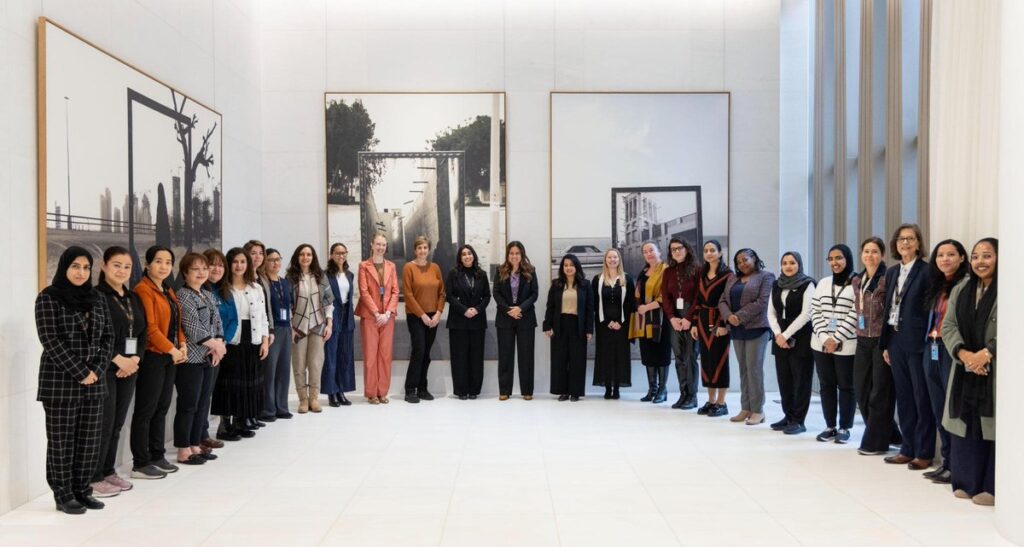
Women propel the UAE’s economy
Women-owned businesses contribute 10% of the total value of the private sector, and every Emirati company is legally required to have female board members. In the workplace, female workers are protected by laws guaranteeing equal pay and maternity leave.
Women are exploring the frontiers of the world
Half of the UAE Space Agency is comprised of women. 77% of UAE students are taking computer science courses and 45% of those in engineering courses are women.
Women and girls have equal access
Over three quarters of Emirati women enroll in higher education after secondary school, and 70% of university graduates in the UAE are women.
Woman are creating policy
Almost a third of Cabinet-level ministers in the UAE are women, and two thirds of public sector jobs are held by women. Half of the seats in the Federal National Council – the UAE’s parliamentary body – are held by women.
Women protect the UAE
During the military operation against Daesh, UAE Air Force pilot Major Mariam Al Mansouri became the first Emirati woman to fly combat missions.
The UAE believes in equal opportunities for all. In its relatively short history, the UAE has ensured educational and economic opportunities for millions of Emiratis and others from around the region.
For the last twelve years, Arab youth have named the UAE as the top place they would like to live and work. The largest private education provider in the Middle East, the UAE’s Centre of Excellence for Applied Research and Training (CERT) attracts students from around the region with educational, training, and applied technology instruction.
The UAE University maintains strategic partnerships with more than 60 international institutions from 25 countries. The UAE is also home to satellite campuses of acclaimed universities such as Harvard University, New York University, the Sorbonne Université, and the National Law School of India.
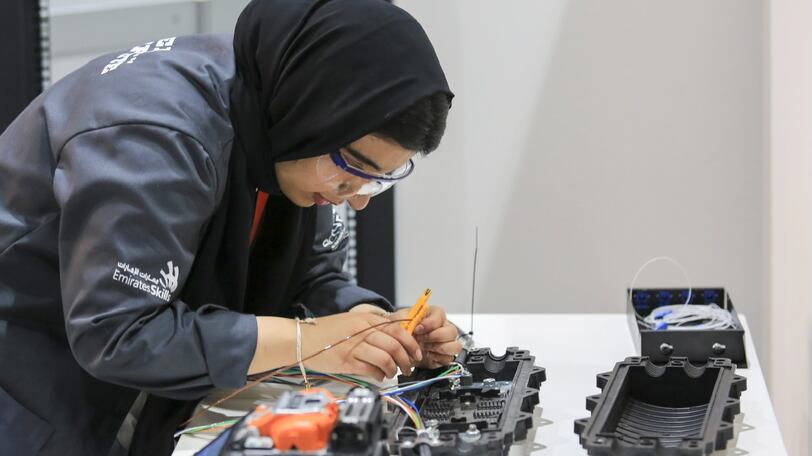
The UAE’s programs and ambitions play a pivotal role in developing the skills and potential of its youth. The majority of Emirati workers on the Hope Probe – the UAE’s mission to Mars – were under 35 years old.
“The achievements that people of determination have made in various spheres over the past years are proof that determination and strong will can do the impossible and encourage people to counter challenges and difficult circumstances while firmly achieving their goals,”
– HH Sheikh Mohammed bin Rashid Al Maktoum, Vice President and Prime Minister of the UAE and ruler of Dubai.
The UAE recognises persons with disabilities as “people of determination”, to represent their achievements across different fields. The UAE protects and promotes the rights of people of determination through its national policies and strategies, including the National Policy for Empowering People of Determination and the Inclusive Education Policy.
The UAE has signed the United Nations Convention on the Rights of Persons with Disabilities (CRPD) and passed federal legislation ensuring that people of different abilities have equal opportunities to participate fully in society.
In 2019, Abu Dhabi became the first city in the Middle East to host the Special Olympics World Games with approximately 7,500 athletes from more than 190 countries who competed in 24 events.

Stay up to date with what’s going on at the Mission by signing up for our email list below.
