As a stable state in a volatile region, the UAE remains committed to resolving, rather than managing, conflict, in pursuit of maintaining international peace and security. The UAE is a reliable partner to both the UN and its Member States, supporting dialogue and diplomacy to solve enduring conflicts.
For over 50 years, the UAE has pursued a progressive vision rooted in tolerance, coexistence, and innovation. As a global hub at the crossroads of three continents, it offers a modern model for an Arab and Muslim country — built on strong institutions, evidence-based policymaking, women’s empowerment, and global engagement. Home to over 200 nationalities and diverse places of worship, the UAE has made religious and cultural pluralism central to its national identity. It has emerged as a world leader and pioneer in promoting tolerance and peaceful coexistence, both domestically and internationally.
More than 200 nationalities, each with their own cultures and traditions, call the UAE home. The UAE is proud to host dozens of Christian churches, two Hindu temples, a Jewish synagogue, a Sikh temple, and a Buddhist monastery.
In February 2023, the UAE opened the Abrahamic Family House — a church, a synagogue, and a mosque all on the same site. The centre is a place of learning, dialogue, and worship. Its design and programming embody the shared values of Christianity, Judaism, and Islam and serves as a living reflection of the UAE’s commitment to understanding and acceptance.
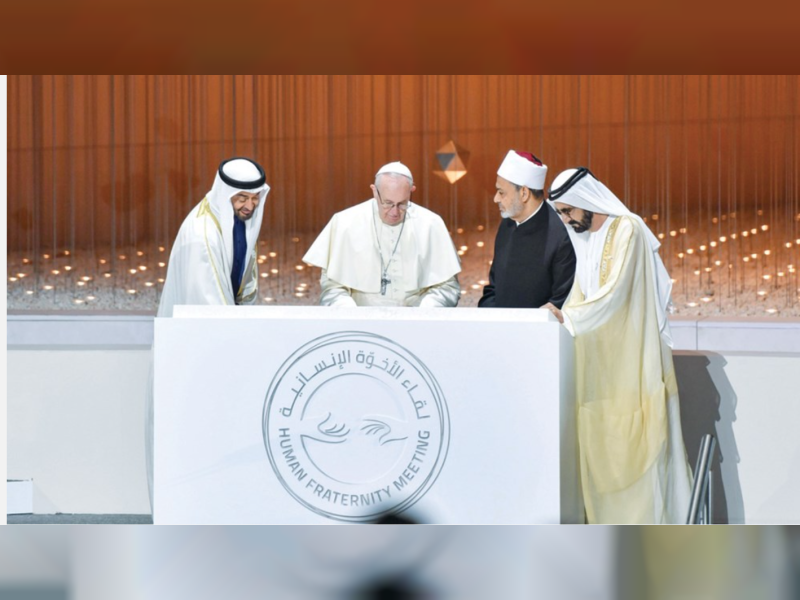
2019 marked the UAE’s Year of Tolerance, the UAE’s celebration of different cultures and faiths. In 2019, His Holiness Pope Francis made a historic visit to the UAE. It was the first ever visit by a sitting pope to the Arabian Peninsula. During that visit, Pope Francis and Dr. Ahmed el-Tayeb, the Grand Imam of Al-Azhar, signed the Document on Human Fraternity for World Peace and Living Together, which envisions how people of differing faiths can peacefully coexist.
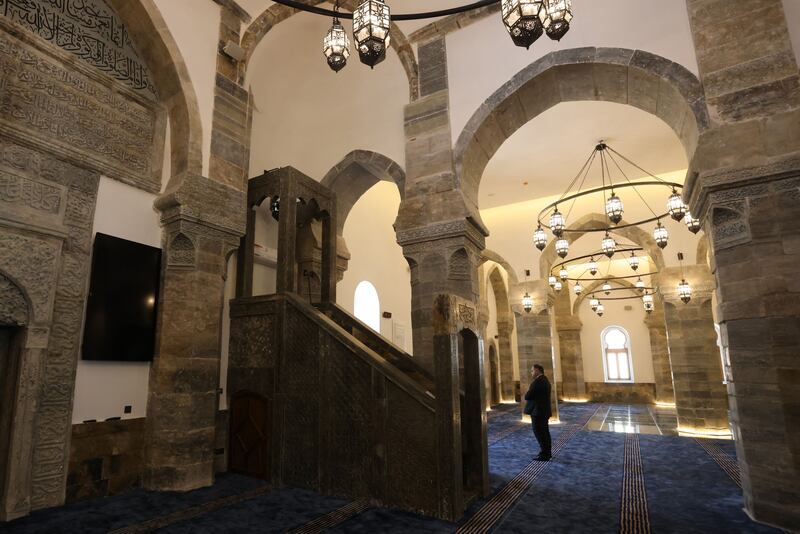
Additionally, in 2019, the UAE partnered with the UN’s heritage agency, UNESCO, to become the first country in the world to restore Christian churches in Iraq destroyed by Daesh. This pioneering initiative, part of the “Revive the Spirit of Mosul” campaign, underscored the UAE’s commitment to cultural preservation, religious pluralism, and post-conflict recovery. In 2025, following years of meticulous restoration, these historic sites were officially reopened to the public. The reopening ceremonies, attended by Iraqi and international dignitaries, marked a powerful symbol of hope, resilience, and coexistence in Mosul, and demonstrated the UAE’s leadership in advancing interfaith dialogue and safeguarding shared human heritage.
The UAE condemns all forms of terrorism and extremism and plays a leading role in global efforts to confront these threats alongside the international community.
The UAE believes that effective solutions require a broad, multi-pronged strategy focused on prevention. That’s why the UAE has established a range of institutions dedicated to this, including:
– The National Committee for Combating Terrorism
– The Sawab Center
– Hedayah (international CVE excellence centre)
– Muslim Council of Elders
– Forum for Promoting Peace in Muslim Societies
These organisations work to address the root causes of extremism by promoting education, tolerance, and peaceful coexistence; empowering youth and women; training religious leaders; and challenging extremist narratives. This comprehensive approach reflects the UAE’s belief that defeating extremism requires the involvement of the whole society and a shared commitment to rejecting divisive ideologies.
The UAE is also an active supporter of UN counter-terrorism efforts, including as a member of the Advisory Board of the United Nations Counter-Terrorism Centre (UNOCT). In December 2023, as Chair of the UN Security Council’s Counter-Terrorism Committee, the UAE led the adoption of the Abu Dhabi Guiding Principles on the threat posed by the use of unmanned aircraft systems for terrorist purposes. This was a major milestone for the international community’s efforts to prevent and build capacity against the misuse of drones by terrorists. The UAE continues to work closely with Member States and the UN to put these principles into practice.
The UAE is also a leading member of the Global Coalition against Da’esh and an active international partner in countering foreign terrorist fighters, enhancing border security, and exchanging information with Member States and INTERPOL. From 2021-2025, Major General Ahmed Nasser Al-Raisi of the UAE served as President of INTERPOL.
The UAE is committed to combatting terrorism financing and other illegal financial activities, including money laundering, through policies and strategies to detect and deter financial crimes and prevent the use of the UAE as a transit route or to transfer funds resulting from any criminal activity. The UAE fully implements its obligations under relevant conventions and protocols, UN Security Council resolutions, and the standards of the Financial Action Task Force, including through international cooperation.
Guided by the UN Global Counter-Terrorism Strategy, the UAE will continue to pursue a whole-of-government and whole-of-society approach to prevention, capacity building, and the promotion of tolerance and peaceful coexistence. The UAE stands ready to work with all partners to counter extremism and terrorism in all its forms.
Learn more about how the UAE is advancing the Tolerance, Peace, and Security (TPS) Agenda here.
Stay up to date with what’s going on at the Mission by signing up for our email list below.
